The Blacksmith’s forge is the heart of the shop. The heat source that allows the metal to be forged. forge, furnace, hearth. They go by many names and come in many shapes, sizes, and types.
Coal/Charcoal
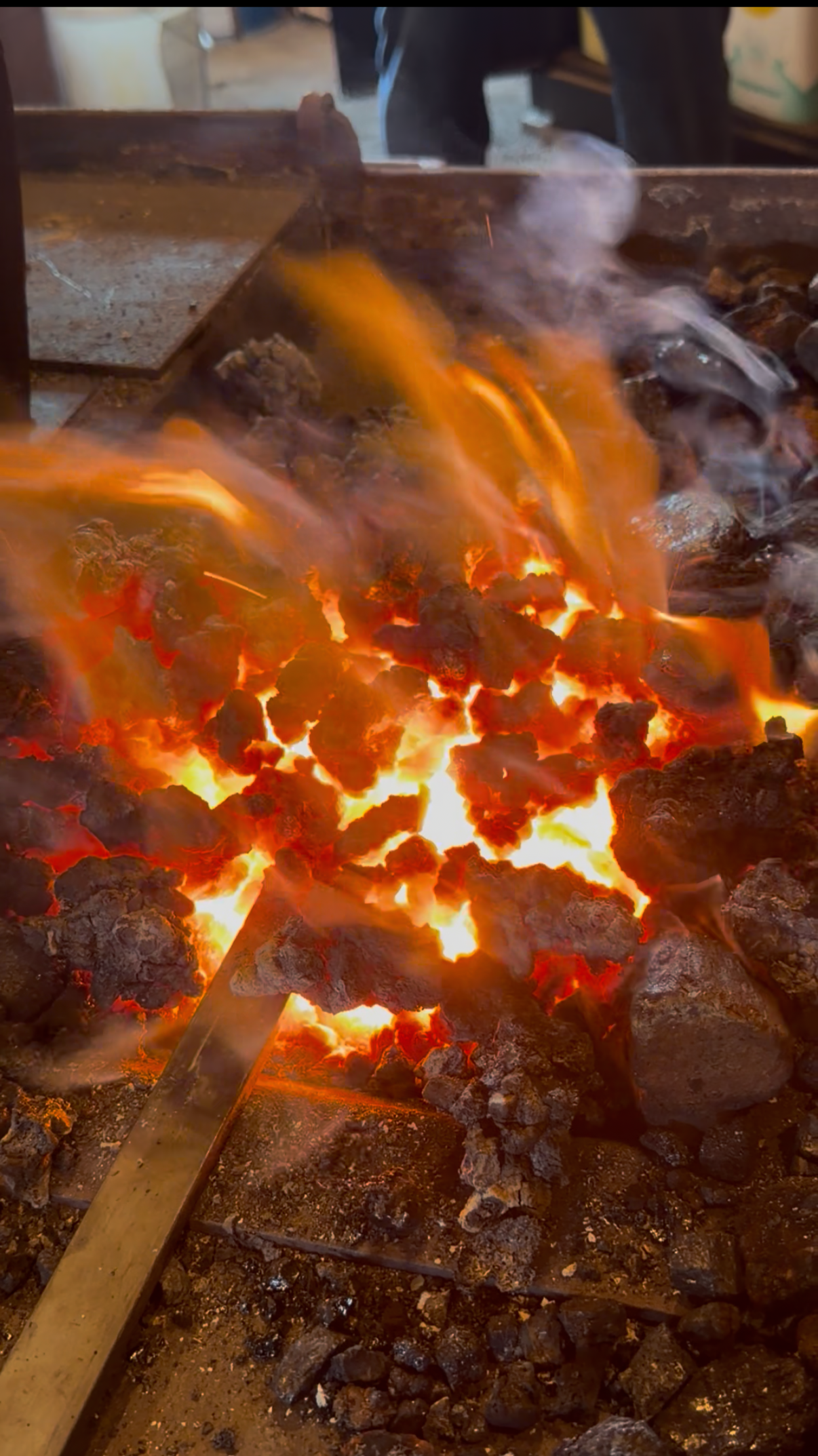
The oldest forms of forge fuel are coal and charcoal. A bellows system, such as a hand crank blower, box bellows, bag bellows, or electric blower, is used to introduce oxygen into a firepot burning coal or charcoal to create temperatures well over 3000F. To start the fire, readily combustible fuel such as paper or scrap wood is set on fire and coal is slowly piled on as air is introduced. Coal forges are excellent for many operations due to their versatile nature, allowing you to approach the fire from any angle and not be limited by the size of your chamber or coil. However, they do require constant maintenance of the fire, and the fuel can be difficult to obtain depending on where you live. A coal forge can be as simple as a hole in the ground with a hair dryer and a pipe for an air supply; due to the simplicity of construction, many new smiths start here.
Propane/Gas
By far the most common type of forge among both hobbyist and professional smiths is the propane forge. (Forges can be built to run on methane and natural gas as well, but these are rare and only used in very specific situations. They are not worth getting into here). Due to the growing popularity of blacksmithing as a hobby, entry-level propane forges are inexpensive and readily available on Amazon. A propane forge is a relatively simple machine, basically just an insulated shell with a burner. The main insulation in a gas forge is a high-temperature ceramic wool. Inexpensive beginner-level forges often only have one layer of insulation, which is serviceable but far from ideal. Many smiths who custom build their own forges often build the shells oversized to accommodate 2 or even 3 layers of primary insulation for better heat retention and fuel efficiency.
However, a forge lined with only ceramic wool is unsuitable and unsafe to use. The wool is very fragile and will quickly become damaged and lose its insulating capabilities from normal wear and tear. Also, the individual fibers that make up the wool will become airborne when the wool is handled, cut, or damaged, and will constantly be thrown out of the forge into the surrounding air by the force of the forge fire. The fibers are very damaging to the lungs; prolonged exposure can cause silicosis and even lead to death. So before a propane forge can be put into service, covering the wool with a castable refractory or refractory mortar to seal and protect the insulation is an absolute essential step. Taking this precaution seals the fibers behind a hard surface, making the forge safe to use.
Gas forges come in two main types; by far the most common type is a “venturi” or “atmospheric” forge. Such as the one pictured below. These are an excellent beginner option as they do not require an external power source or electric blower. If well insulated, they will easily reach forge welding temperatures, and they are still widely used by many professional smiths for portable demo forges and even main shop forges.
Forced-air gas forges rely on an external electric blower piped into the forge above the fuel inlet rather than relying on the venturi effect. While these forges are more expensive and complicated to build, they are preferred by many smiths, myself included, due to greater fuel efficiency and heat control.
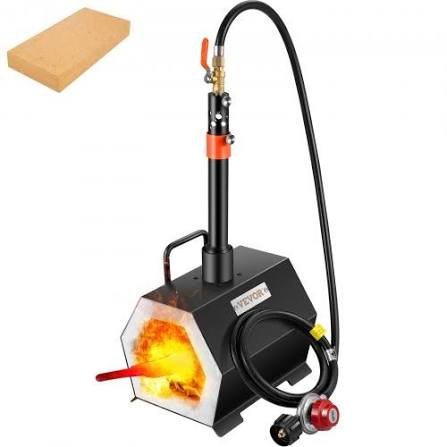
A single burner propane forge manufactured by VEVOR
Induction Forges
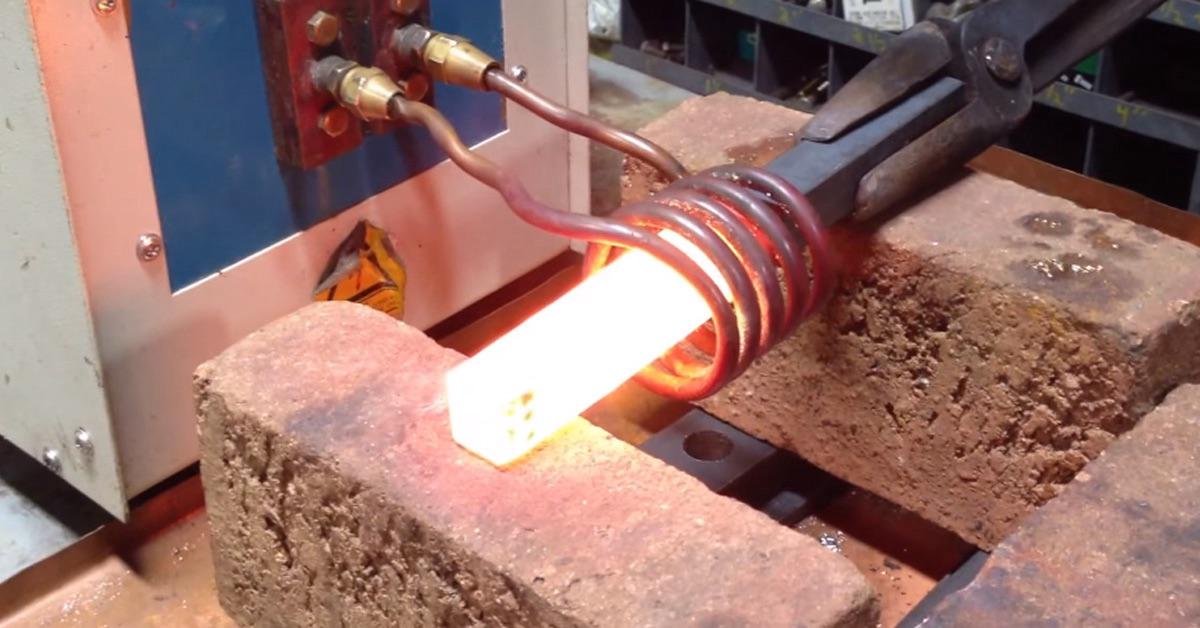
Induction forges have been widely used in industry for decades but have only made their way into wider use in blacksmith shops relatively recently, and are some pretty amazing technology. They work by passing a powerful electrical current through a water-cooled copper coil. The electrical current passing through the coil creates an electromagnetic field inside the coil that heats the metal placed inside the coil. (The technical terms are much more complex, but that’s the gist of it). Induction forges can rapidly heat steel to working and even forge welding temperatures in seconds, and their only real limitation is the size of the coil you can attach to your machine; with the increasing popularity and affordability of these machines, new shapes and styles of coil are constantly becoming available. The only real drawback is their price, with a good-quality, made-in-USA unit costing approximately between $3000 and $5000 USD at the time of this writing. However, once set up, they are clean, quiet, fast, and inexpensive to run. Before writing this article, I spoke with my good friend Derek Melton, who almost exclusively uses induction forging in his shop and produces excellent, high-quality ironwork. He gave me a rundown of the electricity required to use an induction forge for heating steel in a full-time working shop. The figure he reached was about 2 cents per minute of active heating, which works out to around $ 1.20 USD per hour of working time, vs. my own calculations of running my forced-air ribbon burner forges, which come out to approximately $ 3 USD per hour to run (it varies a little based on how hard you are running the fire). So while the startup cost with induction is higher, the machine pays for itself over the long term, and the convenience and fuel independence are attractive options for more and more smiths.
Check out Derek Melton’s work here: https://www.derekmelton.com/