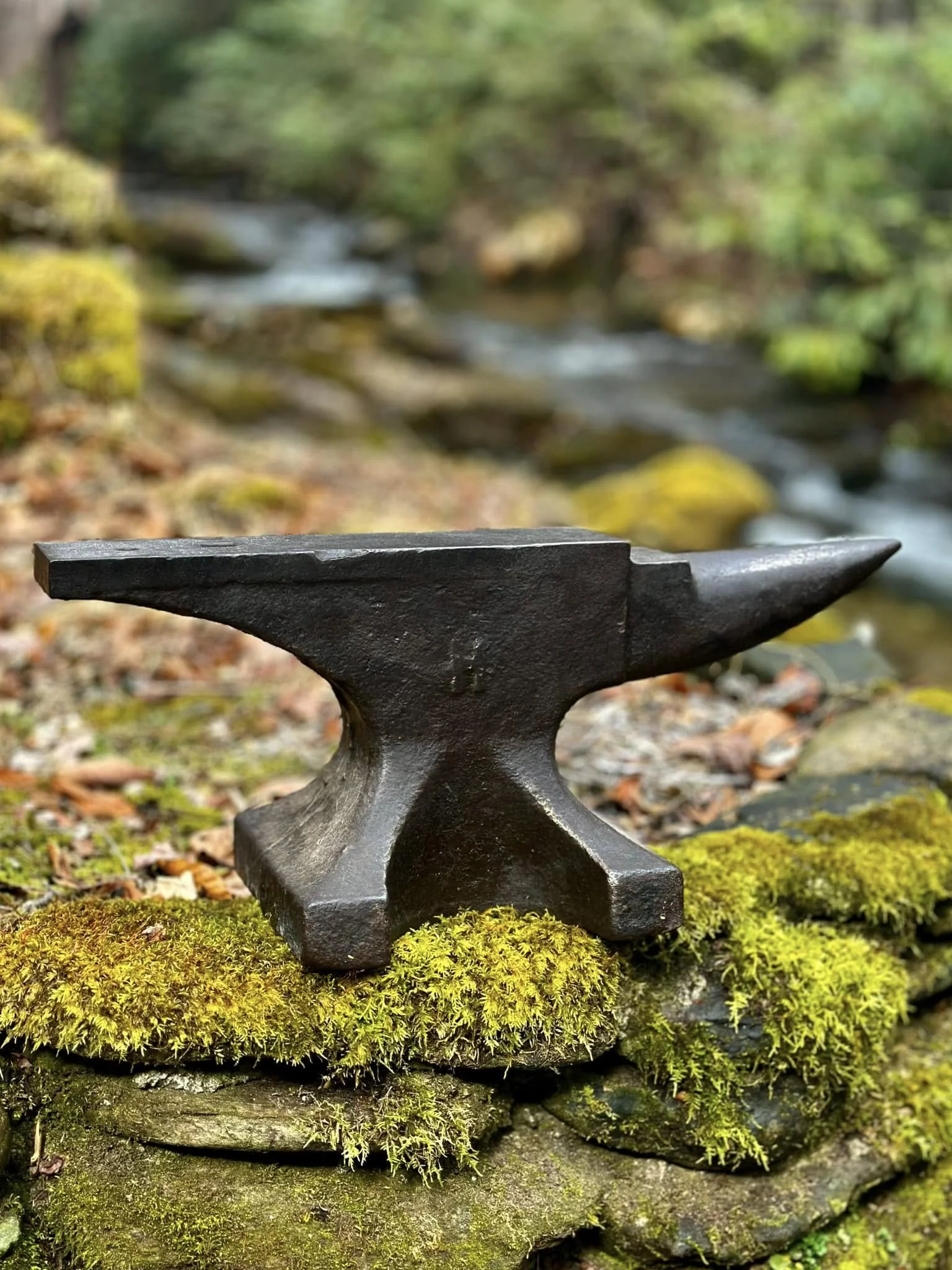
London Pattern Anvil
The anvil is the heart of the blacksmith's shop, the solid, immovable surface that resists the blow of the hammer and shapes steel to the will of the smith. Throughout history, many different shapes and styles of anvils have been used around the world. Here, we'll take a brief look at two of the most common types.
For a much more comprehensive exploration of the subject, I highly recommend the book Anvils in America by Richard Postman.
The London Pattern anvil
The classic blacksmith's anvil features a hardened steel work face, horn, square heel, hardy hole for holding tooling, and often, but not always, a pritchel hole for punching holes in hot iron. It also includes a cutting table, or "bench," which is softer than the work face of the anvil and is intended for tasks that may damage the anvil face, such as cutting hot iron with a chisel.
The Double Horn Anvil
A style of anvil historically more common in continental Europe, this design is now used throughout the world and preferred by many smiths, myself included. It features a tapered heel, or "flat horn," as well as a more traditional round horn, along with hardy and pritchel holes, but lacks a dedicated cutting table.
Many smiths work around this by using a sacrificial piece of plate steel as a cutting surface.
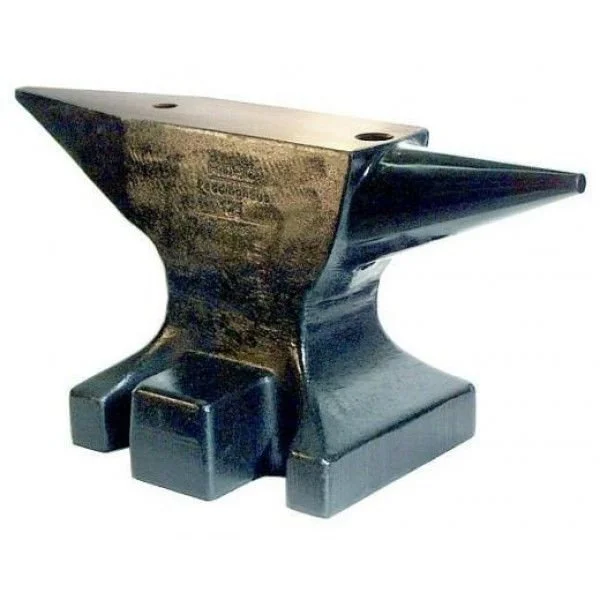
Peddinghaus 275 pound anvil.
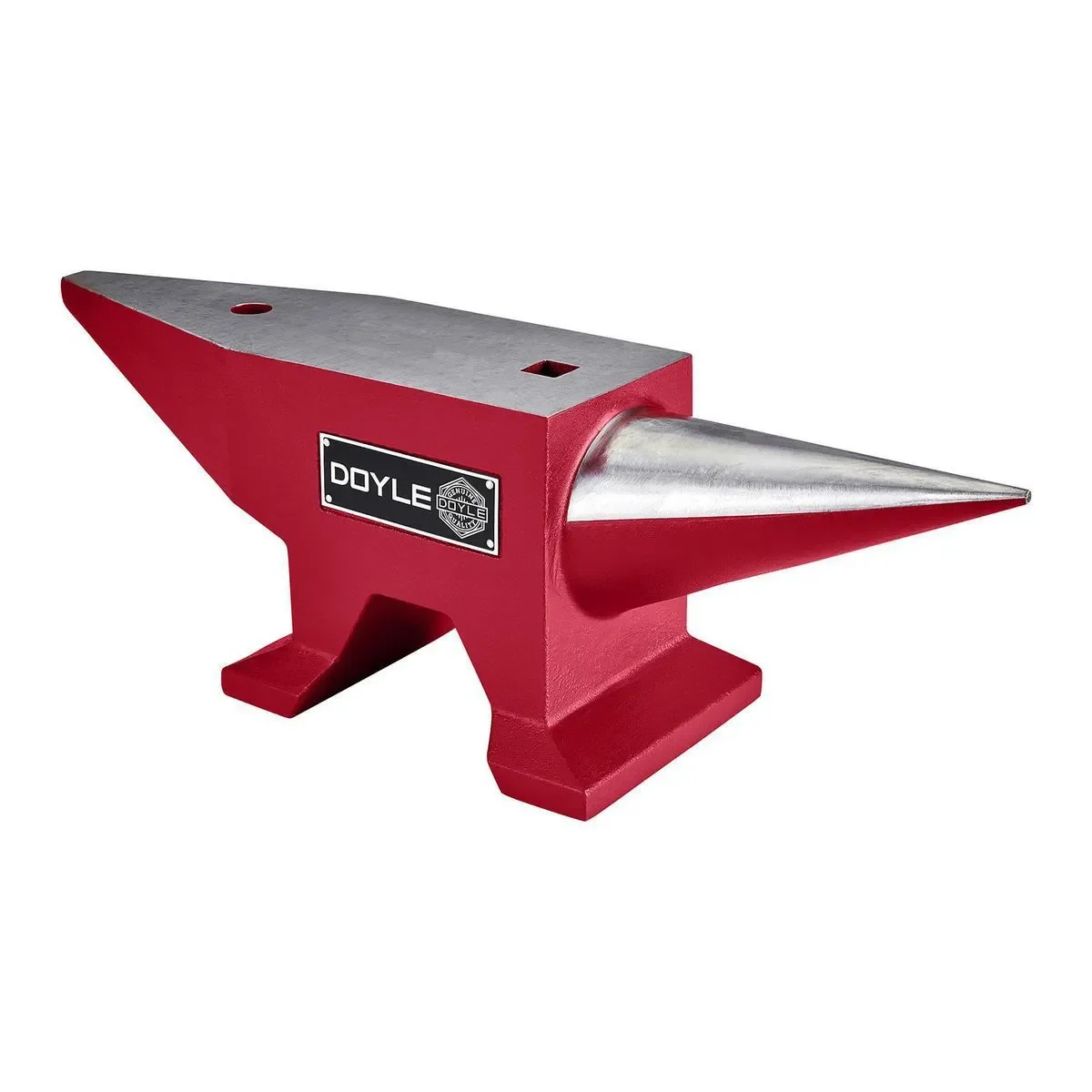
This is a “Doyle” brand anvil from harbor freight tools. An excellent low cost option for beginners
Improvised Anvils
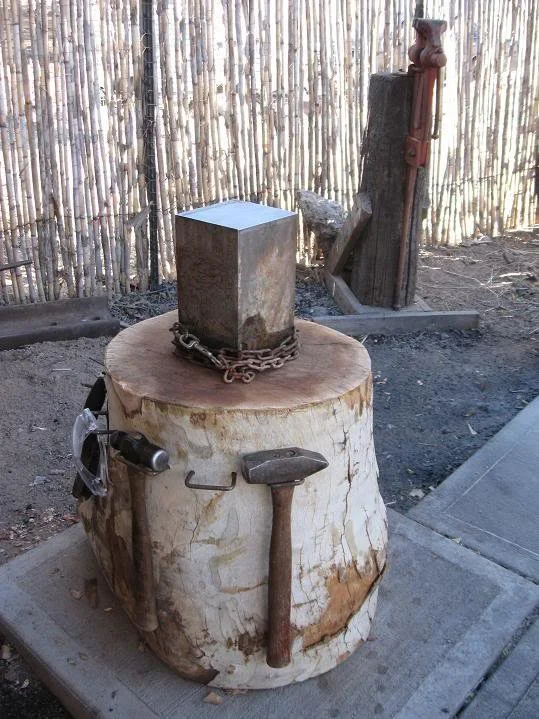
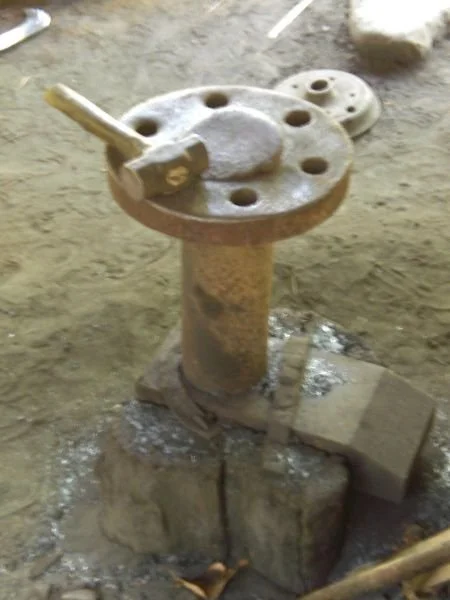
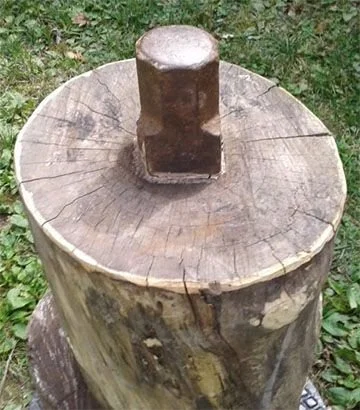
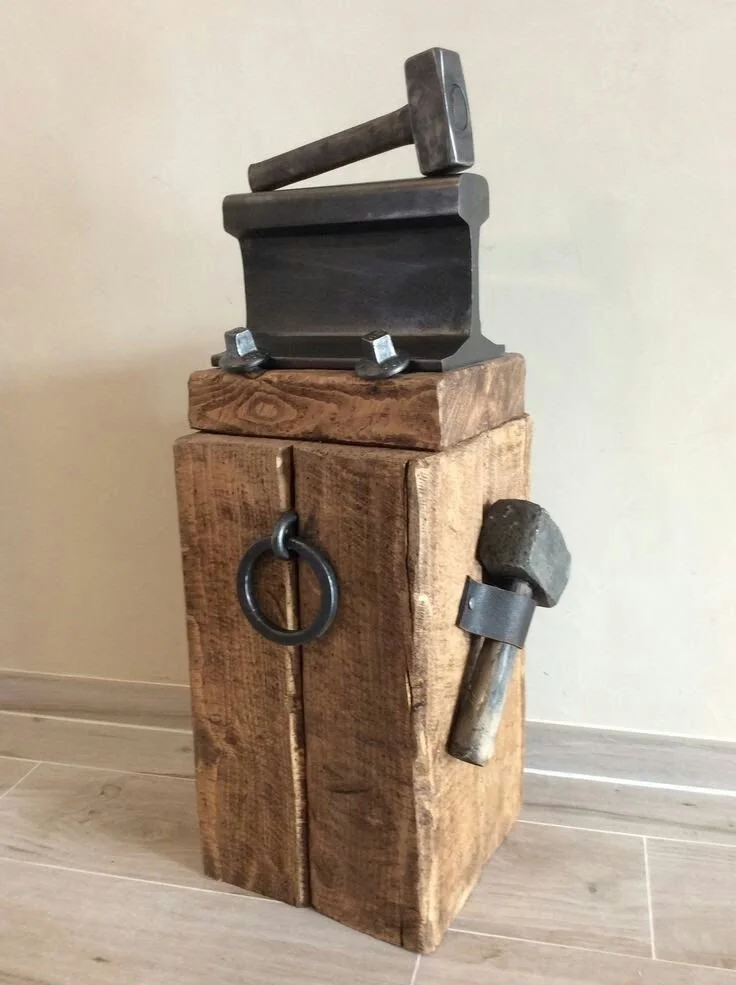
It is worth mentioning that an anvil does not have to look like an “anvil” in the traditional sense. Over the years innumerable pieces of beautiful work have come off the faces of “ASOs” or “anvil shaped objects. They can be as simple as a heavy block or piece of plate steel, sledge hammer head sunken into a stump or a piece of scrap railroad track. Any hard surface that allows you to work steel.